The Wildlife Help project, implemented by ACDB, with the support of Telekom Romania Mobile Communications SA, ends on October 31. The actions carried out had an impact at national level, being carried out within the Center for Wildlife Rehabilitation – ACDB.
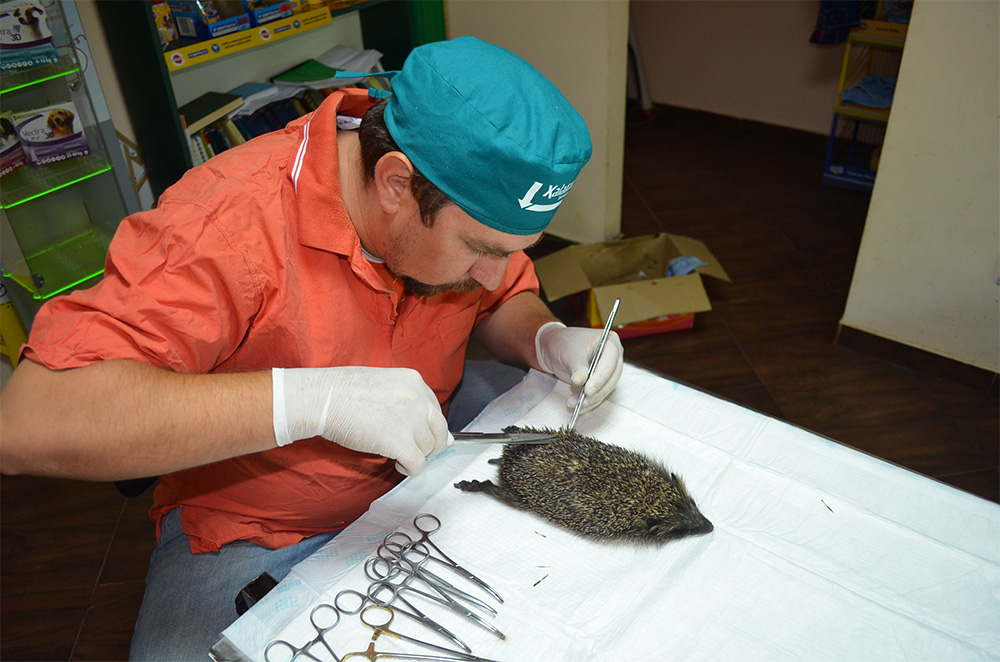
The project objective was to strengthen the capacity to intervene to save wildlife in distress by using innovative systems for online monitoring during treatment and after release in nature.
– The first implementation of the project with a national impact was the establishment of a toll-free telephone line – 0800 800 778, which is currently the only option of its kind for people who identify injured or sick wild animals, thus contributing to the rescue of some wildlife.
The installation of a high-speed internet connection (fiber optics) and a video camera system that covers all accommodation, allowed the initiation of remote monitoring of patients, reducing the stress caused by human presence in the rehabilitation of wildlife.
– The realization of the „Practical guide for reducing accidents on wildlife and intervention in order to save it”, a pioneering publication in the field of rescuing wild animals that have been victims of human activities, is another achievement with national impact. The guide, available free of charge online – http://www.acdb.ro/media/3832/ghid-telekom.pdf, contains useful information on measures aimed at driver behavior to reduce the number of road accidents with victims among fauna, and at the same time the guide contains a guide with the steps to follow in case of identification of an injured wild animal.
– Another important achievement of the project is the acquisition of devices for locating animals treated in the center and released into the wild. Following the completion of this action, the center was equipped with monitoring devices appropriate to the species that have been or are to be released. With the help of these logistics elements, ACDB specialists follow the evolution of patients released back into the natural environment, obtaining important information about the success of treatment / rehabilitation of wildlife species such as red squirrels, forest tufts, swans, or deer.
During the project, the number of wildlife rescue actions at the Wildlife Rehabilitation Center – ACDB increased, along with the involvement of the public and the development of civic spirit. ACDB will continue the wildlife rehabilitation activities even after the end of the project, within the center.